CMISH / Field Studies · Threshold

SAME series

Eighteen studies of what sameness can promise. Change a view, an assumption, a grouping, a connection, or a direction. Watch which conclusions survive.

18 plates · 01–18 measurement · convention · objective · history open any · 1–9 jump · 0 opens 10
arrows select all 18 · enter open · N new tab book of plates → · Volume solves on opening
Field study 01v0.2 · hosted

SAME N

Same count. Different claims.

What can a shared count promise?

Frozen
N = 1,536
Free
generative story
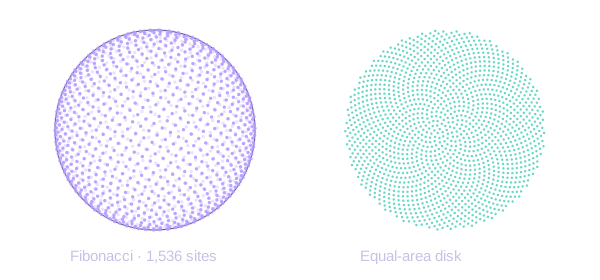
spherical samplingRandomSobolFibonacci
Fibonacci sphere and equal-area disk, 1536 sites
Fibonacci shown · low spacing variation is one property, not an overall ranking
Fibonacci opens firstOpen →
Field study 02v0.1.2

SAME SHADOW

Same projection. Different bodies.

What did the view discard?

Frozen
one silhouette
Free
the body behind it
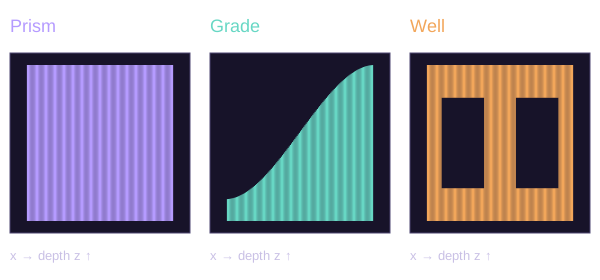
occupancy from a projectionPrismGradeWell
Occupied depth sections of the three bodies at y equals zero
Section at y = 0 · identical occupied x extent · Well’s enclosed cavity is visible
Prism opens firstOpen →
Field study 03v0.2.1

SAME EARTH

Same planet. Different frames.

What did the projection change?

Frozen
one sampled surface
Free
projection
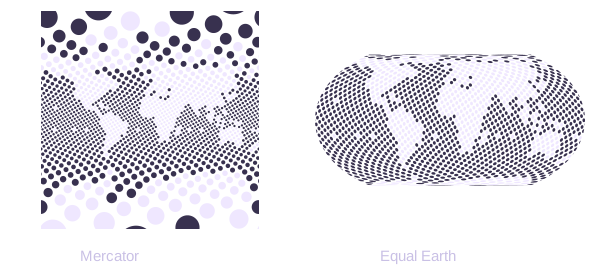
measure vs shapeGlobeMercatorEqual Earth
Same spherical disks in Mercator and Equal Earth
Same disks · seam clipping · independently fitted map panels
Globe opens firstOpen →
Field study 04v0.1.3

SAME SITES

Same generators. Different territory.

Who defined nearest?

Frozen
seven generators
Free
metric
nearest-site territoryEuclideanTaxicabChebyshev
EuclideanTaxicabChebyshev
Same seven sites · Euclidean, Taxicab and Chebyshev · native 360² rasters
Euclidean opens firstOpen →
Field study 05v0.2.3

SAME SAMPLES

Same samples. Different assumptions.

What does one measurement control?

Frozen
one measured set
Free
interpolating assumptions
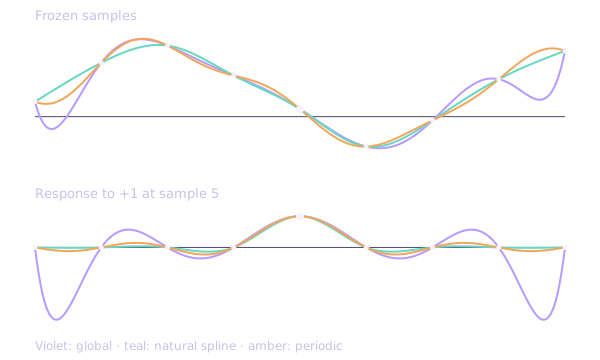
model / influenceGlobalLocalPeriodic
Three reconstructions above, and response to a unit change at sample five below
Common axes within each panel · same measured values · different influence
Global opens firstOpen →
Field study 06v0.3.2

SAME VOLUME

Same target budget. Different obligations.

What does better mean?

Frozen
target mean density 0.40
Free
obligation
structure / allocationCarryConductShare
slow to form
CarryMech 1.00×Heat 213.90×ρ mean 0.40000ConductMech 4715.55×Heat 1.00×ρ mean 0.40000ShareMech 1.27×Heat 1.59×ρ mean 0.40001
Target 0.40 · achieved means 0.40000000 / 0.40000000 / 0.40001309 · local SIMP results
Carry opens firstOpen →
Field study 07v0.1.2

SAME MARGINALS

Same x. Same y. Different pairing.

What did the separate lists lose?

Frozen
same x, same y
Free
pairing
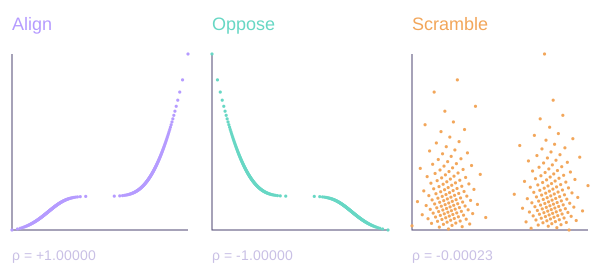
couplingAlignOpposeScramble
Three pairings of the same x and y values
Same x and y lists · fixed pairing permutations · common axes
Align opens firstOpen →
Field study 08v0.1

SAME AVERAGE

Same averages. Different groups.

Whose weights made the average?

Frozen
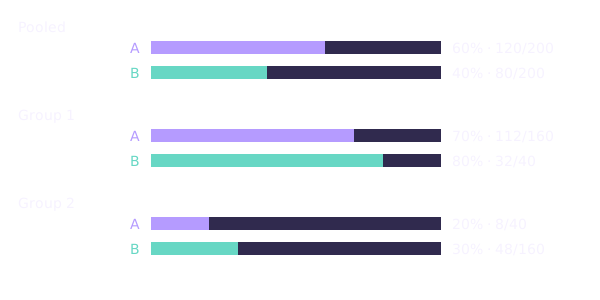
400 records · A 60%, B 40%
Free
group membership
aggregation / weightsAgreeDisappearReverse
Reversal: A leads pooled sixty to forty percent; B leads within both groups
Reverse grouping shown · identical pooled rates · exact integer counts
Agree opens firstOpen →
Field study 09v0.1.2

SAME MAGNITUDE

Same Fourier magnitude. Different structure.

What did magnitude leave out?

Frozen
one Fourier magnitude
Free
phase
spectrum vs structureSourceBorrowedScrambled
SourceBorrowedScrambled
Three real reconstructions · one magnitude array · common linear grayscale
Source opens firstOpen →
Field study 10v0.1

SAME LAW

Same rule. Different histories.

What else does a prediction need?

Frozen
update rule · domain · grid
Free
initial position
dynamics / predictionABC
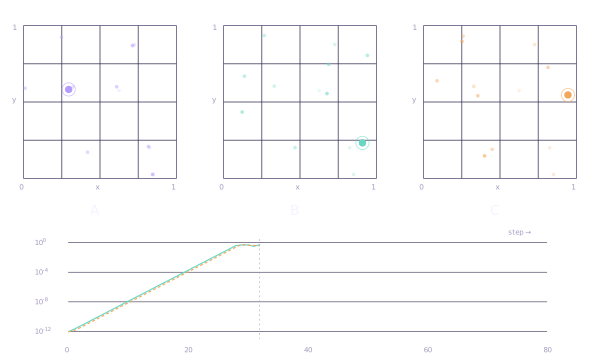
Three exact trajectories at step 32 and their distances from the reference
Step 32 · ε = 2⁻⁴⁰ · below: distance from A, logarithmic scale
Step 32 opens firstOpen →
Field study 11v0.1

SAME MOVES

Same moves. Different place.

What did order change?

Frozen
six rigid motions · λ = 1
Free
composition order
rigid motion / compositionGivenReversedShuffled
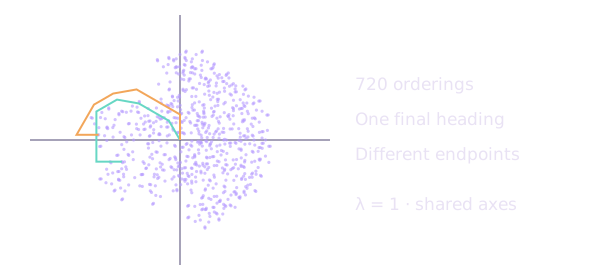
All 720 endpoints with given and reversed paths at lambda one
All 720 endpoints · Given and Reversed paths · λ = 1 · fixed equal-unit axes
Given opens firstOpen →
Field study 12v0.1

SAME DIVERGENCE

Same sources. Different flow.

What did the sources leave open?

Frozen
source field ρ · witness flux
Free
divergence-free component
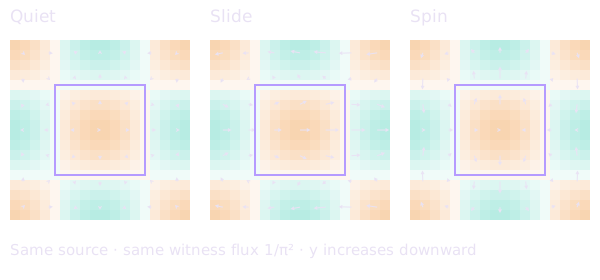
vector fields / underdeterminationQuietSlideSpin
Quiet Slide and Spin velocity fields with identical source and witness square
Shared source and arrow scale · witness flux 1/π² · y increases downward, as in the live exhibit
Quiet opens firstOpen →
Field study 13v0.1

SAME DEGREES

Same neighbors counted. Different worlds.

Can every local count match while the network comes apart?

Frozen
12 vertices · degree 3 · 18 edges · positions
Free
who connects to whom
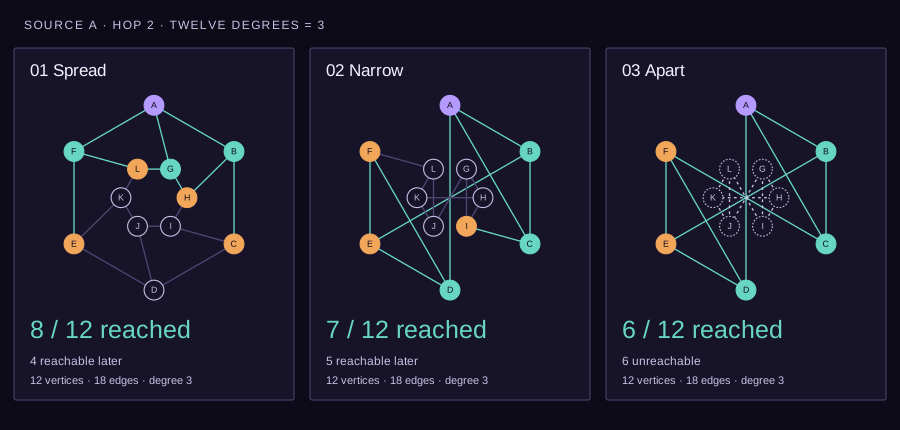
networks / reachabilitySpreadNarrowApart
Same degrees: three networks after two hops from A
Source A, two hops · Spread reaches 8, Narrow 7, Apart 6 · every vertex has degree 3 · identical positions and 18 edges
Spread opens firstOpen →
Field study 14v0.1

SAME IMPULSE

Same push integrated. Different motion.

How much does the timing of a push matter?

Frozen
applied impulse · oscillator · starting rest
Free
force timing
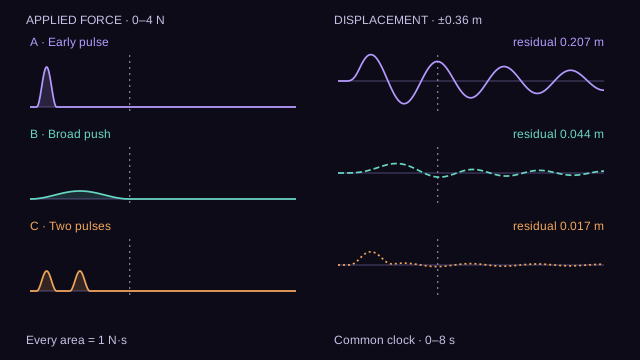
forced linear dynamicsEarly pulseBroad pushTwo pulses
Same applied impulse, different oscillator responses
Applied impulse 1 N·s in every case · two pulses 1 s apart · exact responses on fixed axes · residual envelope measured at 3 s
Two pulses · 1 s apart opens firstOpen →
Field study 15v0.1

SAME EIGENVALUES

Same eventual stability. Different excursions.

Does eventual decay mean a disturbance never grows?

Frozen
eigenvalues −1, −2 · start (0, 1) · units · norm
Free
off-diagonal coupling k
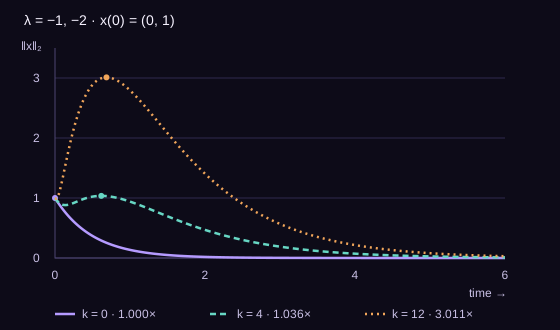
linear dynamics / transient growthk = 0k = 4k = 12
Same eigenvalues, different transient norms
k = 0, 4, 12 · peak / initial norm 1.000×, 1.036×, 3.011× · fixed starting vector (0, 1), units, and Euclidean norm
k = 12 opens firstOpen →
Field study 16v0.1

SAME DISTANCES

Same distances. Different handedness.

Can equal distances certify a proper rigid match?

Frozen
six distances; four labels; units
Free
orientation; permission to reflect
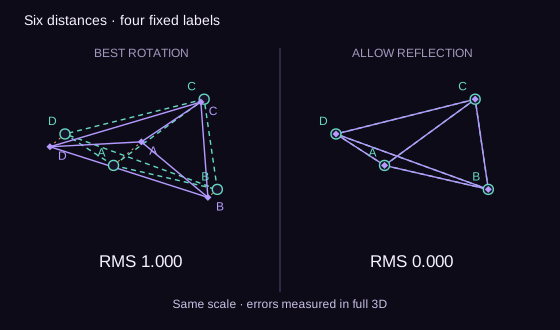
distance geometryRotateBest proper fitReflect
Same distances, opposite handedness
The same six distances survive both panels. Left: the global rotation-and-translation minimum retains 1 unit of 3D RMS error. Right: reflection closes the gap. Both use the same projection and scale.
Manual rotation opens firstOpen →
Field study 17v0.1

SAME RESIDUAL

Same residual size. Different error.

Does the same residual size promise the same solution error?

Frozen
matrix A · right-hand side b · residual norm 1 · units
Free
residual direction θ
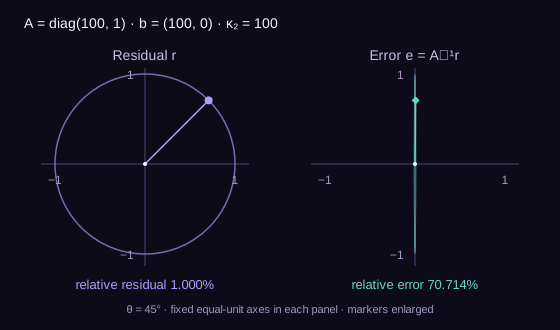
linear algebra / conditioningFirst axisDiagonalSecond axis
Same residual, different solution error
θ = 45° · relative residual 1.000% · relative error 70.714% · κ₂ = 100 · equal-unit circle and error ellipse
45° diagonal opens firstOpen →
Field study 18v0.1

SAME FIT

Same fitted summary. Different structure.

What did the fitted summary leave out?

Frozen
11 observations · summary at declared rounding precision · shared axes
Free
arrangement of the observations
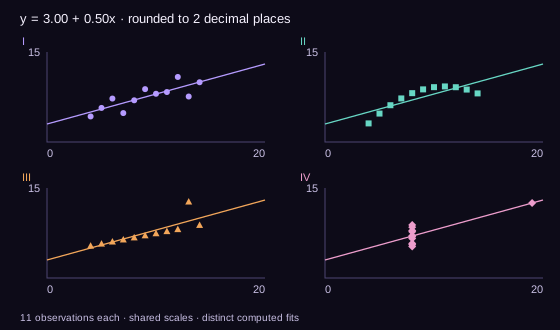
statistics / regression diagnosticsQuartet IQuartet IIQuartet IIIQuartet IV
Anscombe’s quartet: matching rounded summaries, different structures
Anscombe’s quartet · 11 points each · lines round to y = 3.00 + 0.50x · actual fitted coefficients differ · variance y agrees at 1 decimal place
all four datasets opens firstOpen →

How to use. Each card opens a full-page exhibit. The top-left ← Series chip returns here. The figures are computed from the study data. Open an exhibit to change its method and inspect a point. Volume solves its three designs when opened; the other exhibits are ready to inspect.